Compound Profiles8 min read
Complementary Mechanisms in Tissue Repair
Vascular supply, cell migration and matrix deposition are sequential stages, not parallel effects. The literature groups repair compounds accordingly.
Read entryStack 01
Angiogenic signalling, cytoskeletal mobilisation and matrix synthesis in one preparation.
What this grouping is
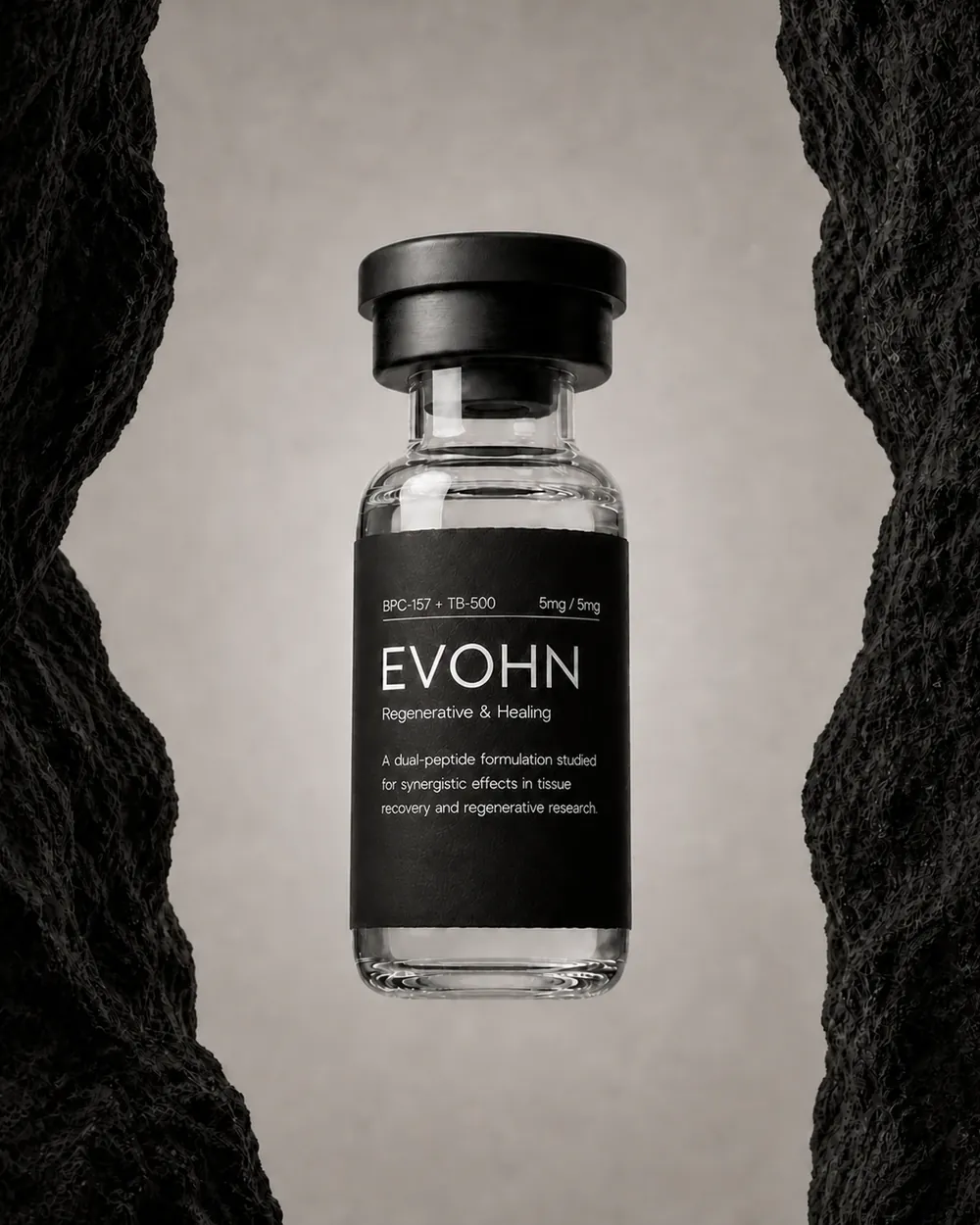
The most frequently assembled grouping in the tissue-repair literature. BPC-157, TB-500 and GHK-Cu act on three different stages of the same process — vascular supply, cell migration, and the matrix those cells deposit — which is why comparative work rarely examines one without reference to the others.
Assembled here as independently certified vials rather than a blend, so that a component can be withheld, substituted or titrated without discarding the group. Each vial carries its own analytical record.
To make the three principal mechanisms of soft-tissue remodelling available in one documented set, so that their contributions can be separated rather than confounded.
02 independently certified vials
Each component carries its own batch number and its own certificate of analysis. A stack result is only traceable if every batch identifier is recorded.
01
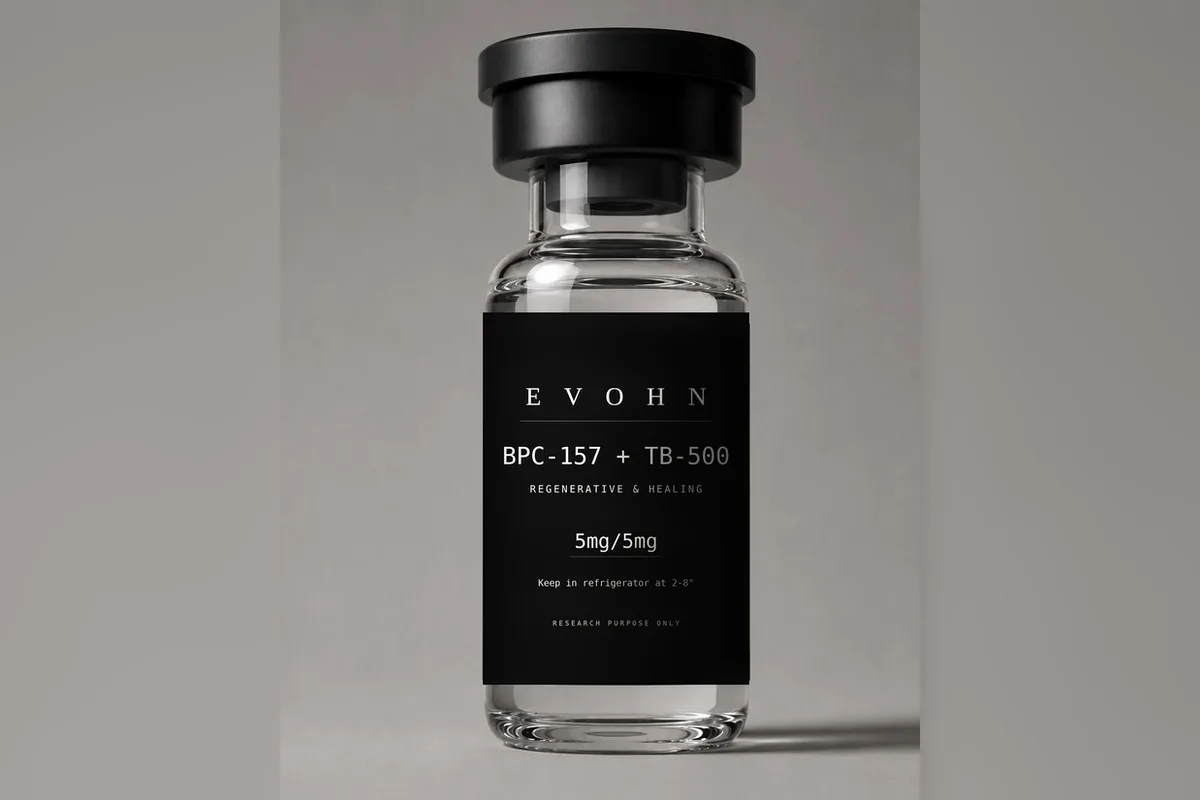
5 mg + 5 mg / vial
Angiogenic signalling and actin sequestration — establishes vascular supply and mobilises the cellular response.
02
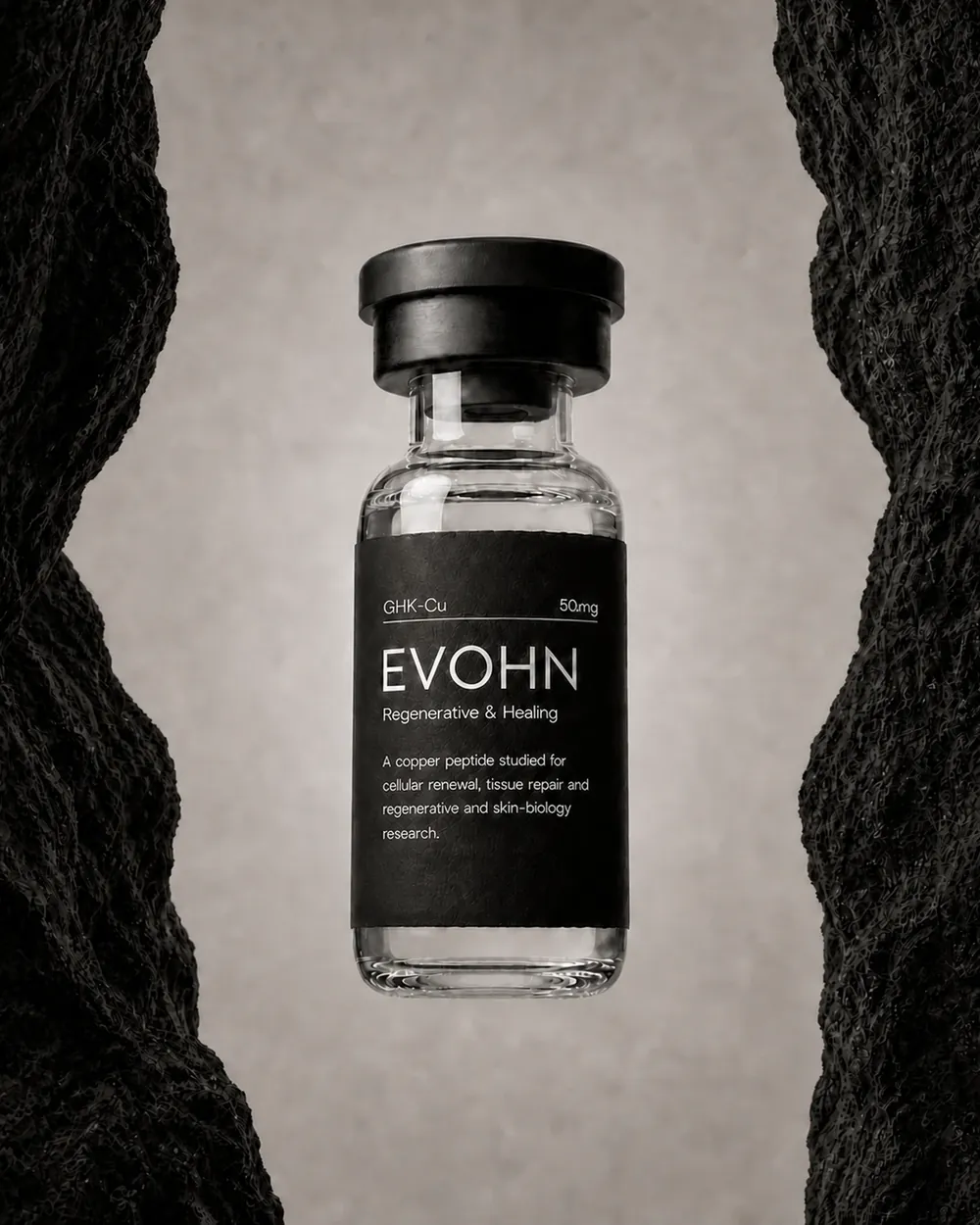
50 mg / vial
Copper delivery and matrix regulation — governs what is deposited.
BPC-157 is characterised as acting on the VEGFR2-Akt-eNOS axis, establishing vascular supply. TB-500 sequesters monomeric G-actin and shifts the polymerisation equilibrium that governs cell migration into the affected region. GHK-Cu delivers copper to fibroblasts and modulates the balance between matrix metalloproteinases and their tissue inhibitors, determining what those migrated cells deposit. The published rationale for the grouping is sequential rather than additive: each mechanism is upstream of the next.
How the set is handled
A description of laboratory practice as the published record reports it. Nothing here is administration guidance, and none of it should be read as such.
Every component is supplied lyophilised and is stored independently at −20 °C, protected from light and moisture. Components are not pre-mixed: each vial carries its own batch number and its own certificate of analysis, and each is reconstituted separately. Once in solution, hold at 2–8 °C and observe the interval stated on the batch certificate for that specific component — the shortest interval in the group governs the group.
Storage & handling guideFurther reading
About this grouping
This catalogue is presented for informational purposes only. It is not an offer of sale, and it makes no medical or therapeutic claim.
Enquiries
Ask a specialist about the Regenerative Protocol — component batches, current documentation, and what can be supplied to your territory.