Longevity / Copper Peptide
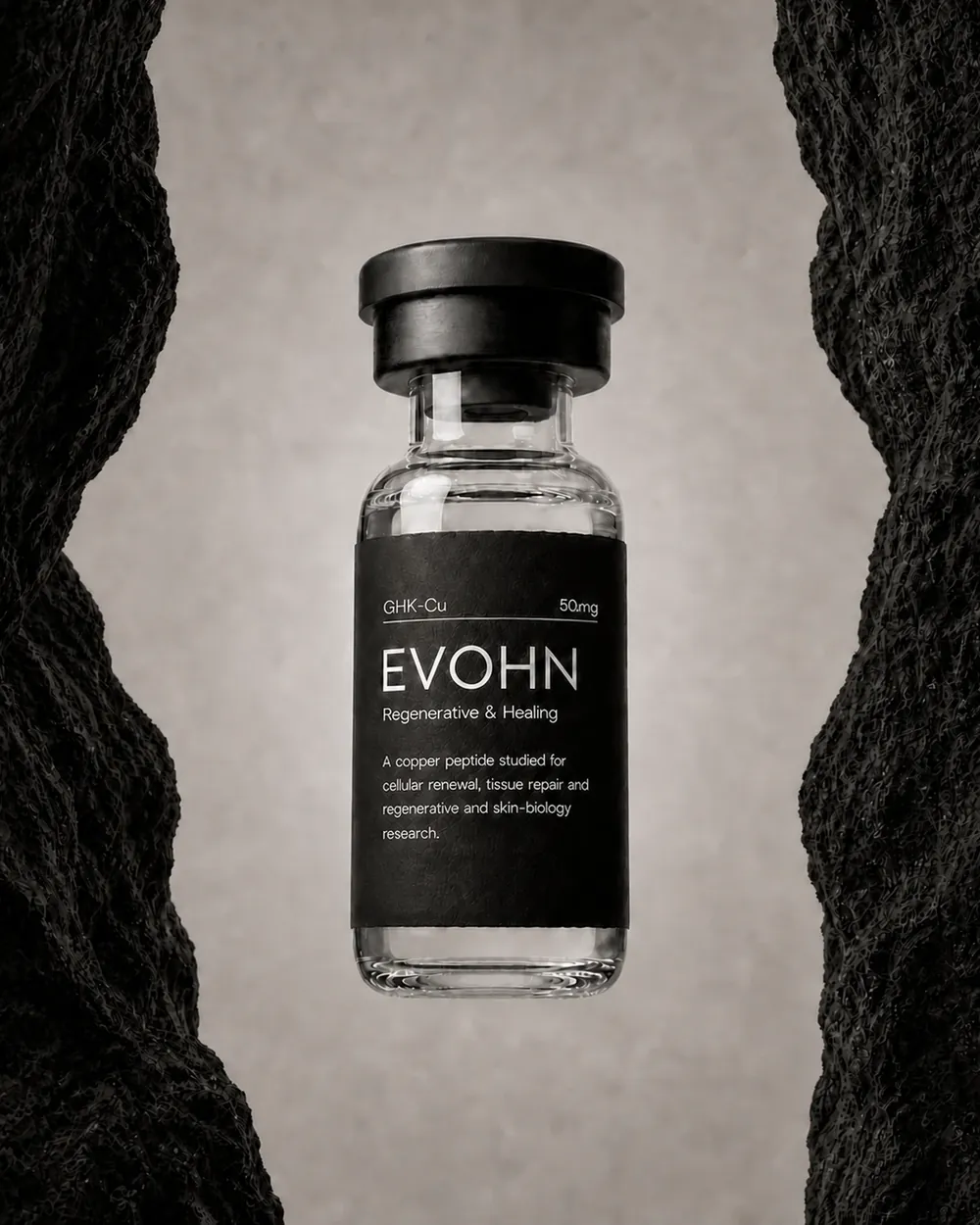
GHK-Cu
A copper-binding tripeptide examined for collagen synthesis and matrix remodelling.
- Research domain
- Longevity
- Presentation
- 50 mg / vial
- Assayed purity
- 99.68%
- Evidence base
- Extensively studied
Also designatedCopper tripeptide-1 · Glycyl-L-histidyl-L-lysine copper · GHK · Copper peptide
Quick facts
- Purity specification
- ≥ 99% by HPLC
- Physical form
- Lyophilised powder
- Presentation
- 50 mg / vial
- Evidence base
- Extensively studied
- Intended use
- Laboratory research only
Current batch · EVN-GHK-2606
Meridian Analytical Laboratories, 9 Jun 2026. Assayed content 49.62 mg / 50 mg.
View certificateResearch overview
How it is characterised
GHK-Cu is the copper(II) complex of the tripeptide glycyl-L-histidyl-L-lysine, a sequence found in human plasma with high affinity for copper ions. Published work characterises its role in extracellular matrix turnover, examining effects on collagen and glycosaminoglycan synthesis, metalloproteinase and inhibitor balance, and broad gene expression modulation in dermal fibroblast models. Plasma concentration of the tripeptide is reported to decline with age, which is why it is examined alongside the longevity compounds rather than only as a dermal agent.
Mechanism
The tripeptide is described as a physiological copper carrier, exchanging Cu(II) with albumin at a defined affinity and delivering it to cells. Downstream literature reports modulation of several hundred genes in fibroblast models, with particular attention to the balance between matrix metalloproteinases and their tissue inhibitors.
Applications
- Extracellular matrix research
- Cellular ageing characterisation
- Metalloprotein assay development
- Dermal model investigation
Research focus
Areas of published investigation
The following describe where this compound has been examined in the scientific literature. They are not claims of effect, and nothing here should be read as a therapeutic indication.
- 01Collagen and glycosaminoglycan synthesis
- 02Matrix metalloproteinase regulation
- 03Copper ion transport and delivery
- 04Age-related change in plasma tripeptide concentration
Research compatibility
Frequently co-studied
Compounds that appear alongside GHK-Cu in the published record, and the reason the literature examines them together.
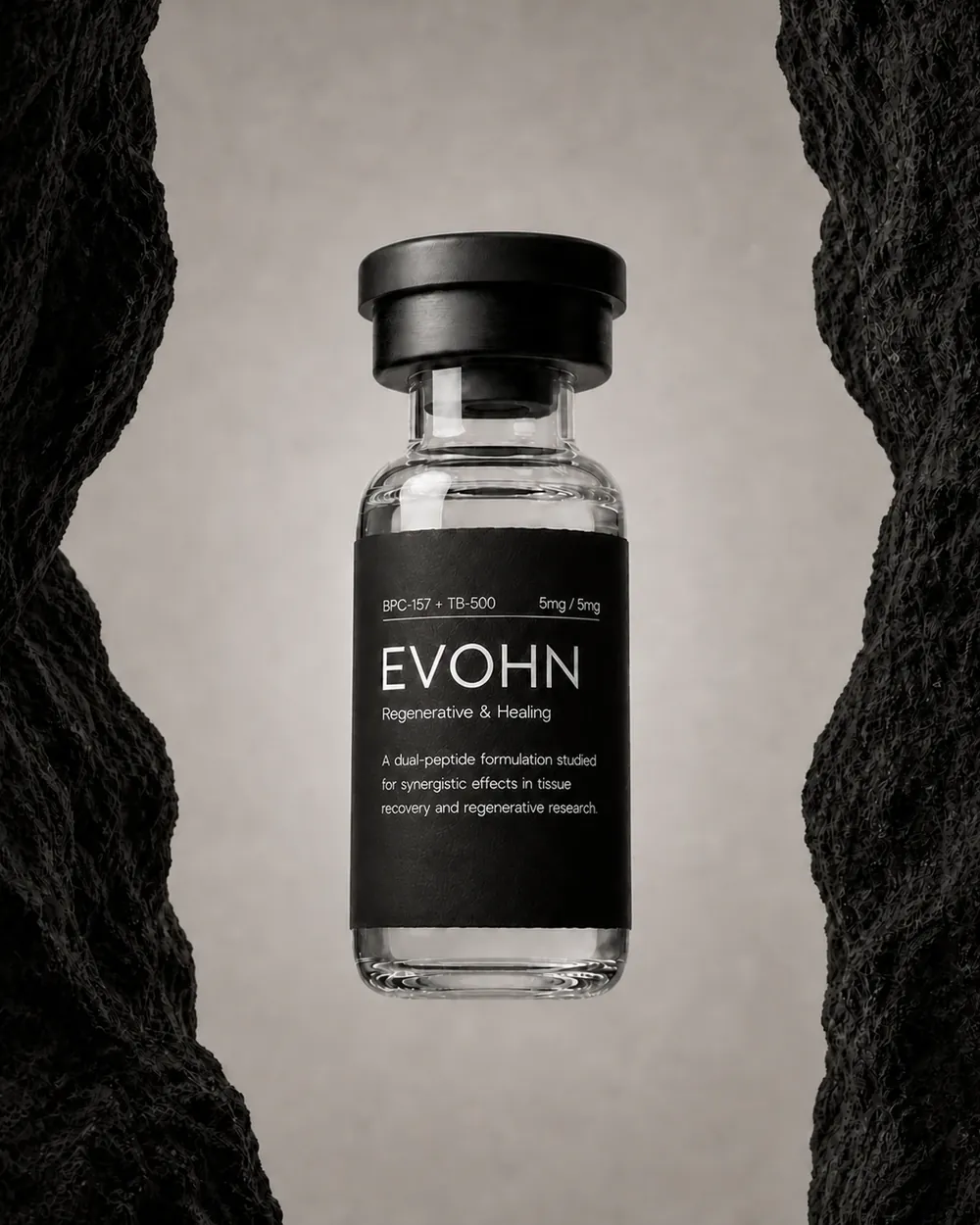
- BPC-157 + TB-500Combined where vascularisation, cell migration and matrix synthesis are measured in one preparation.
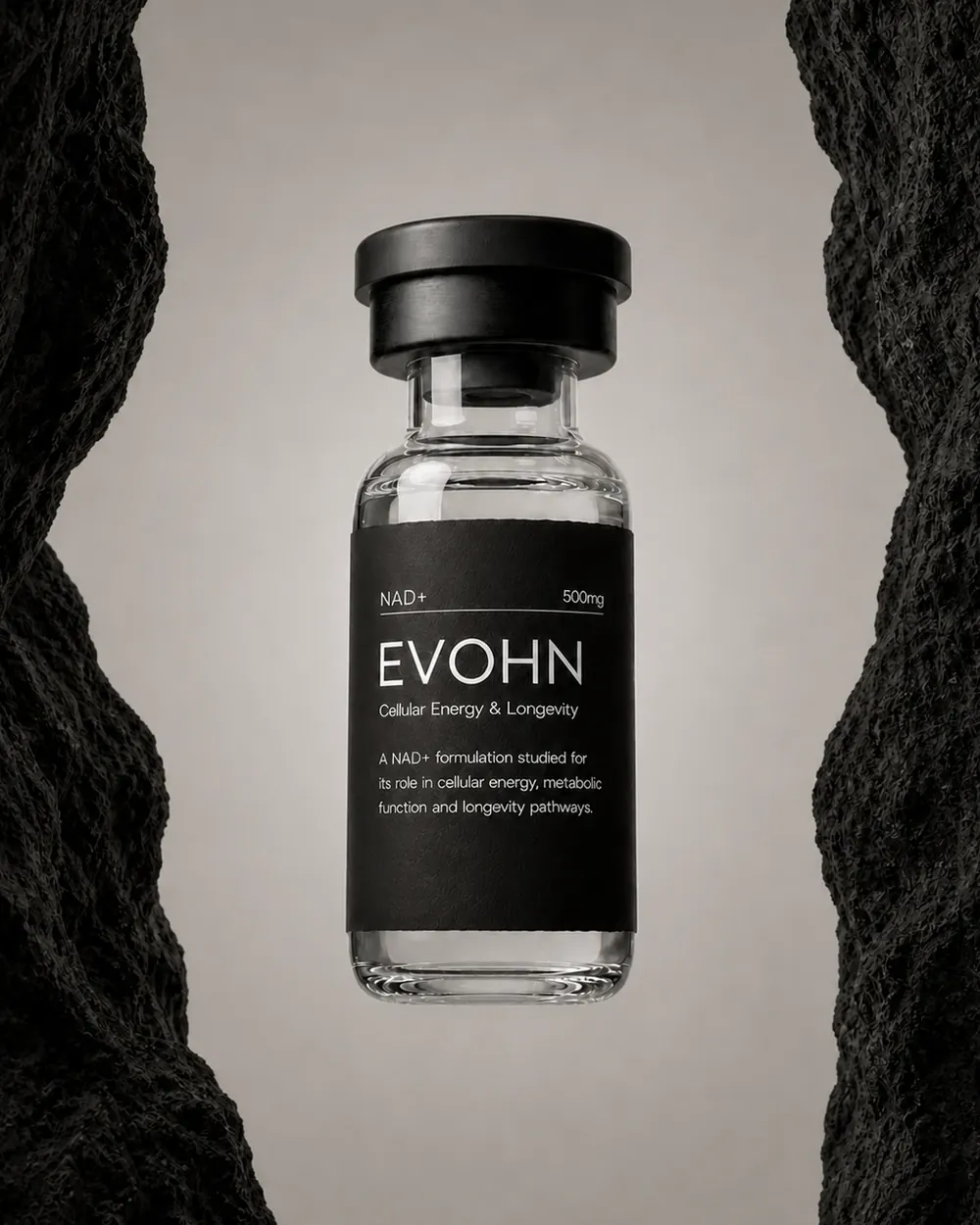
- NAD+Co-studied where redox state is treated as an input to matrix turnover.
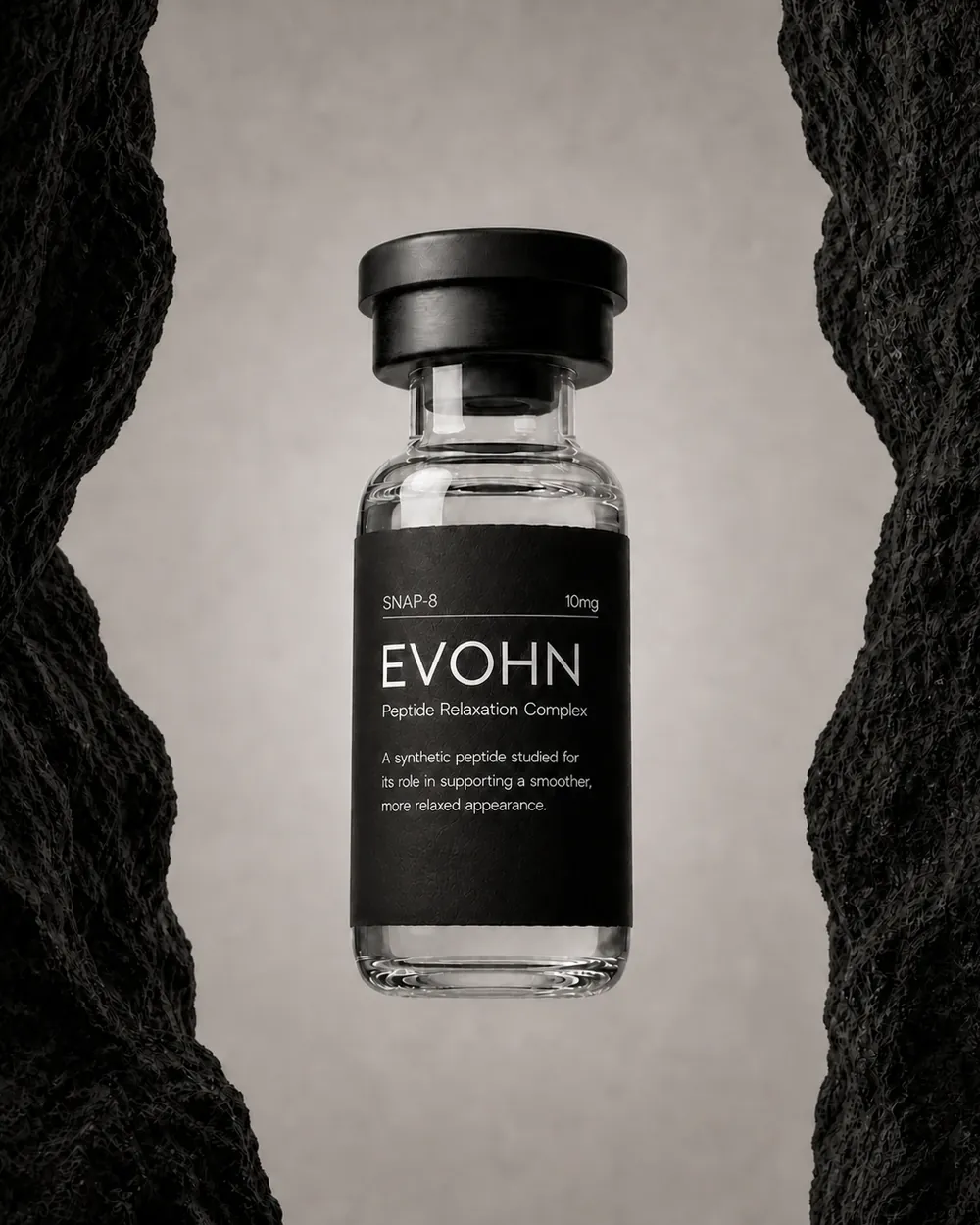
- SNAP-8Examined together where matrix-active and expression-active peptides share a dermal model.
Included in research stacks
Molecular & pharmacokinetic data
The physical record
Verify every figure against the certificate of analysis for the batch you hold. Where the label and the assay disagree, the assay is the number to calculate from.
- CAS number
- 89030-95-5
- Molecular formula
- C₁₄H₂₂CuN₆O₄
- Molar mass
- ≈ 401.91 g/mol
- Sequence
- GHK (copper-complexed)
- Reported half-life
- Short in circulation; matrix-bound fraction persists
- Solubility
- Soluble in water; deep blue in solution
Analytical record
Batch EVN-GHK-2606
Analysed by Meridian Analytical Laboratories, ISO/IEC 17025 accredited, under accession MAL-26-06077. The certificate is retrievable from the issuing laboratory independently of us.
Full certificate- Purity
- 99.68%RP-HPLC, UV 214 nm · spec ≥ 99.0%
- Identity
- 401.8 Da (theoretical 401.9)ESI-MS · spec Conforms to theoretical mass
- Assayed content
- 99.2% of labelRP-HPLC against reference standard · spec 95.0 – 110.0% of label
- Water content
- 3.2%Karl Fischer titration · spec ≤ 8.0%
- Residual solvents
- Acetonitrile 71 ppm; TFA below quantitationHeadspace GC-FID · spec Within USP <467> limits
- Appearance
- Deep blue lyophilised powderVisual inspection · spec Conforms
Storage
Store lyophilised at −20 °C, protected from light and moisture. The copper complex is oxidation-sensitive; minimise headspace and exposure. Following reconstitution, hold at 2–8 °C and use within the interval stated on the batch certificate of analysis.
Handling
Oxidation-sensitive. Minimise headspace when aliquoting and avoid contact with reducing agents or chelators that would strip the copper centre. The characteristic blue solution colour is expected; note any change in the batch record.
Packaging
Amber borosilicate vial with butyl stopper and aluminium crimp seal, presented in a matte debossed box with die-cut foam insert and magnetic closure.
Selected references
The published record
A starting point rather than a survey. Entries are listed for orientation and do not constitute endorsement of any interpretation drawn from them.
- 01GHK-Cu and human gene expressionBioMed Research International, 2014
- 02Copper peptides in extracellular matrix remodellingJournal of Investigative Dermatology, 2012
- 03GHK: a plasma tripeptide and copper carrierInternational Journal of Molecular Sciences, 2018
This catalogue is presented for informational purposes only. It is not an offer of sale, and it makes no medical or therapeutic claim.
You may also be studying
Enquiries
Request the batch documentation.
Ask a specialist about GHK-Cu — its current batch, analytical documentation, and what can be supplied to your territory.