Recovery / Co-Study Pair
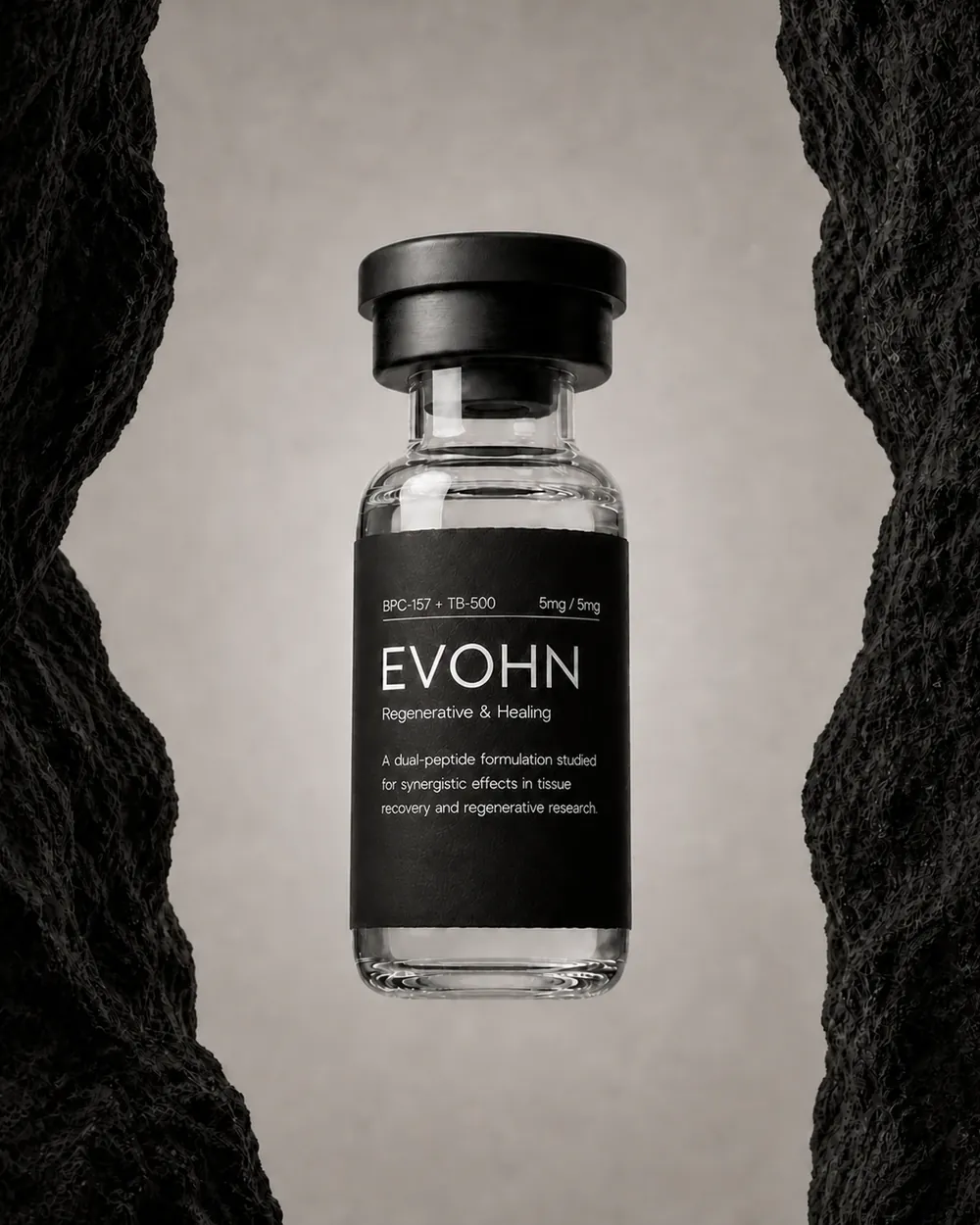
BPC-157 + TB-500
The two most frequently paired repair peptides, presented together for co-study.
- Research domain
- Recovery
- Presentation
- 5 mg + 5 mg / vial
- Assayed purity
- 99.82%
- Evidence base
- Extensively studied
Also designatedBPC-157 · TB-500 · Body Protection Compound-157 · Thymosin beta-4 fragment · Pentadecapeptide BPC 157 · Tβ4
Quick facts
- Purity specification
- ≥ 99% by HPLC
- Physical form
- Lyophilised powder
- Presentation
- 5 mg + 5 mg / vial
- Evidence base
- Extensively studied
- Intended use
- Laboratory research only
Current batch · EVN-BPC-2606
Meridian Analytical Laboratories, 8 Jun 2026. Assayed content 5.06 mg / 5 mg.
View certificateResearch overview
How it is characterised
This preparation presents BPC-157 and TB-500 in a single vial, in the proportion in which the tissue-repair literature most often examines them. BPC-157 is a synthetic fifteen amino acid peptide corresponding to a partial sequence of body protection compound, a protein isolated from human gastric juice. TB-500 is a synthetic preparation corresponding to thymosin beta-4, a forty-three amino acid actin-sequestering peptide present in most mammalian cell types. The two are studied together because their characterised mechanisms are complementary rather than overlapping.
Mechanism
BPC-157 is described in published models as upregulating vascular endothelial growth factor receptor 2 with downstream activity along the VEGFR2-Akt-eNOS axis, alongside modulation of the nitric oxide system and effects on focal adhesion kinase that underlie the fibroblast migration reported in tendon preparations. TB-500 is characterised as sequestering monomeric G-actin, shifting the polymerisation equilibrium and altering cytoskeletal turnover. The pairing is examined as angiogenic signalling and cytoskeletal mobilisation measured in one model.
Applications
- Soft-tissue repair research
- Musculoskeletal model characterisation
- Cell motility and cytoprotection assays
- Combination mechanism investigation
Research focus
Areas of published investigation
The following describe where this compound has been examined in the scientific literature. They are not claims of effect, and nothing here should be read as a therapeutic indication.
- 01Angiogenic signalling and VEGFR2 pathways
- 02G-actin sequestration and cytoskeletal dynamics
- 03Fibroblast and endothelial cell migration
- 04Extracellular matrix organisation
Research compatibility
Frequently co-studied
Compounds that appear alongside BPC-157 + TB-500 in the published record, and the reason the literature examines them together.
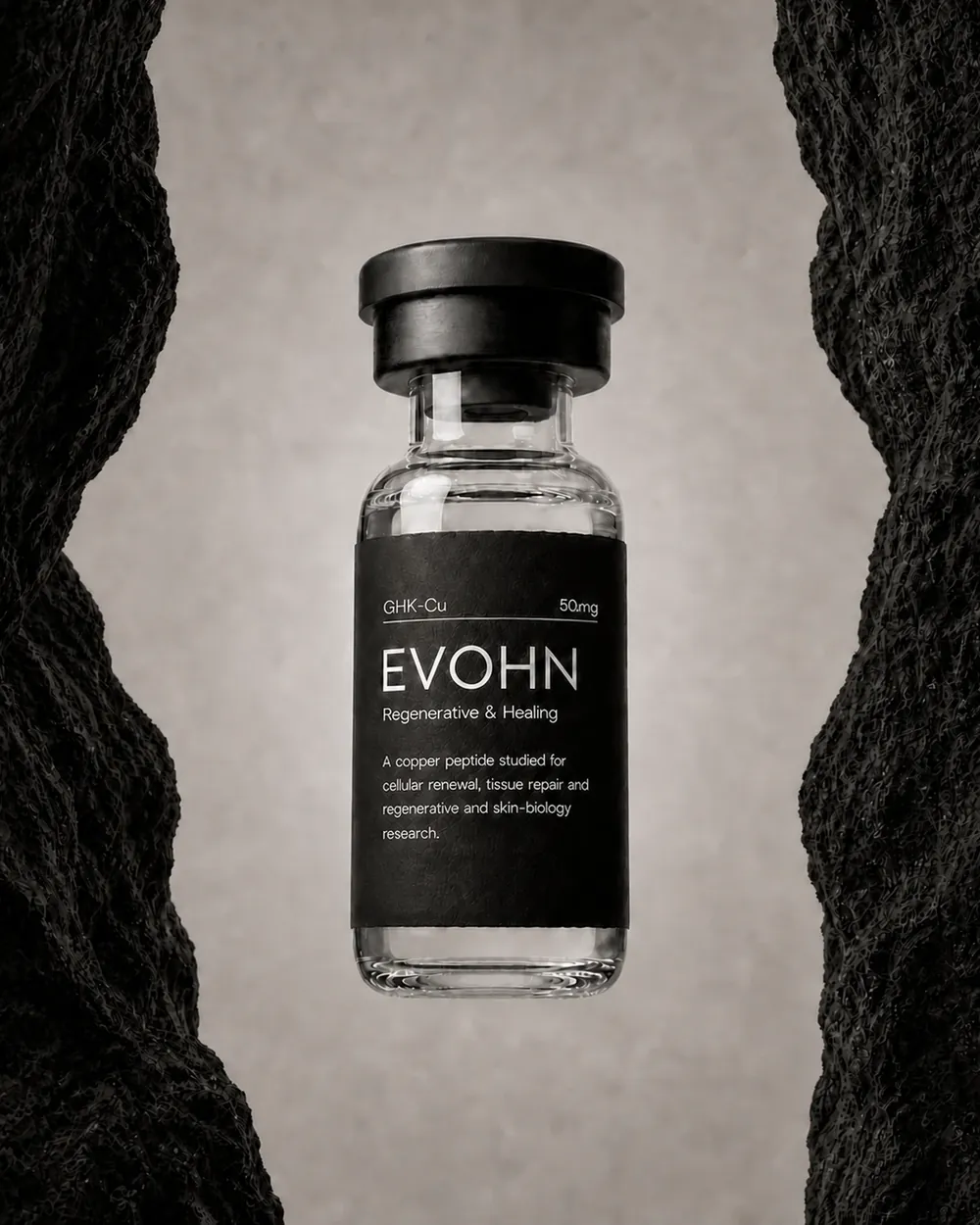
- GHK-CuStudied together where matrix remodelling and vascularisation are examined in one dermal model.
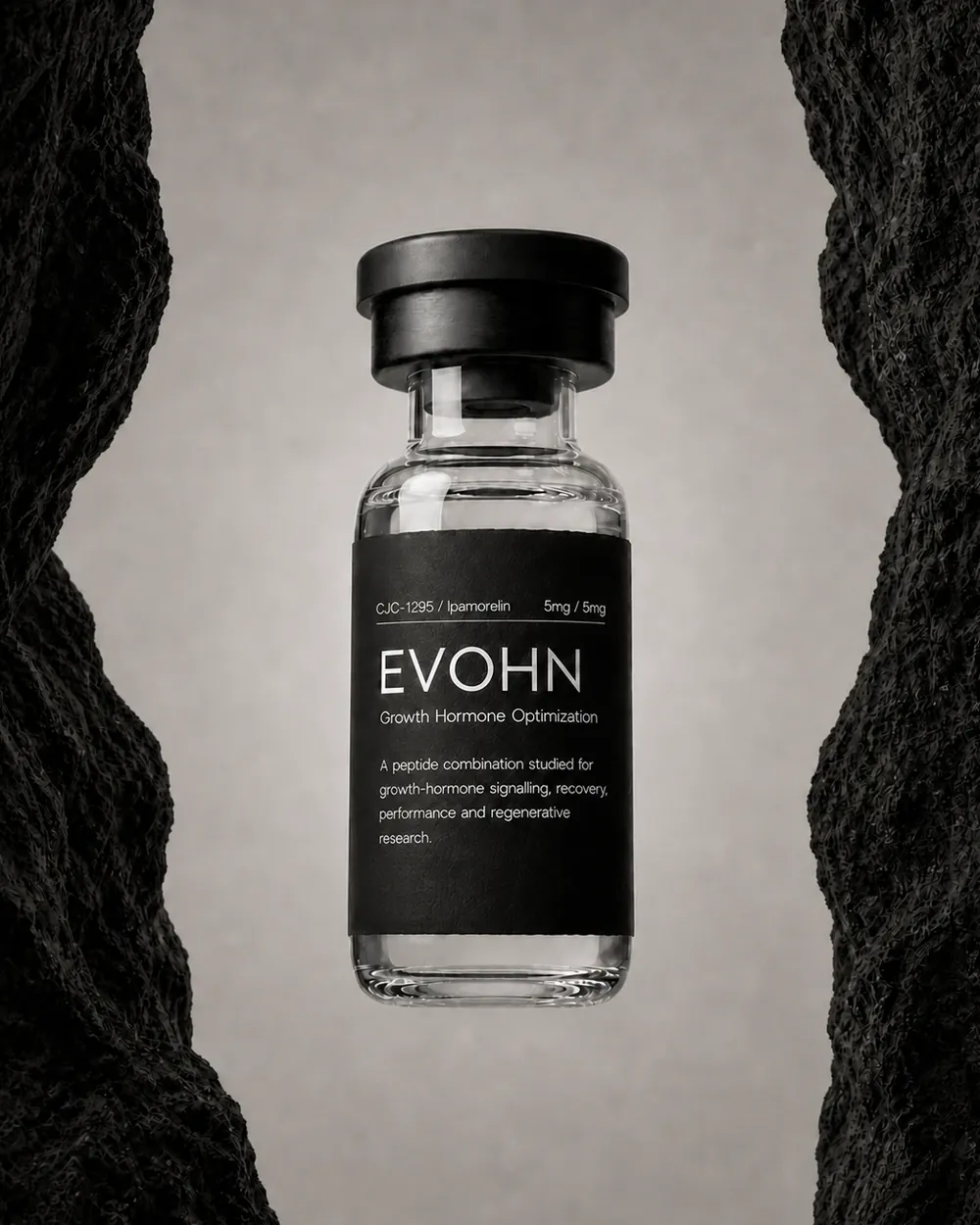
- CJC-1295 / IpamorelinCo-examined where growth factor receptor expression is a shared endpoint.
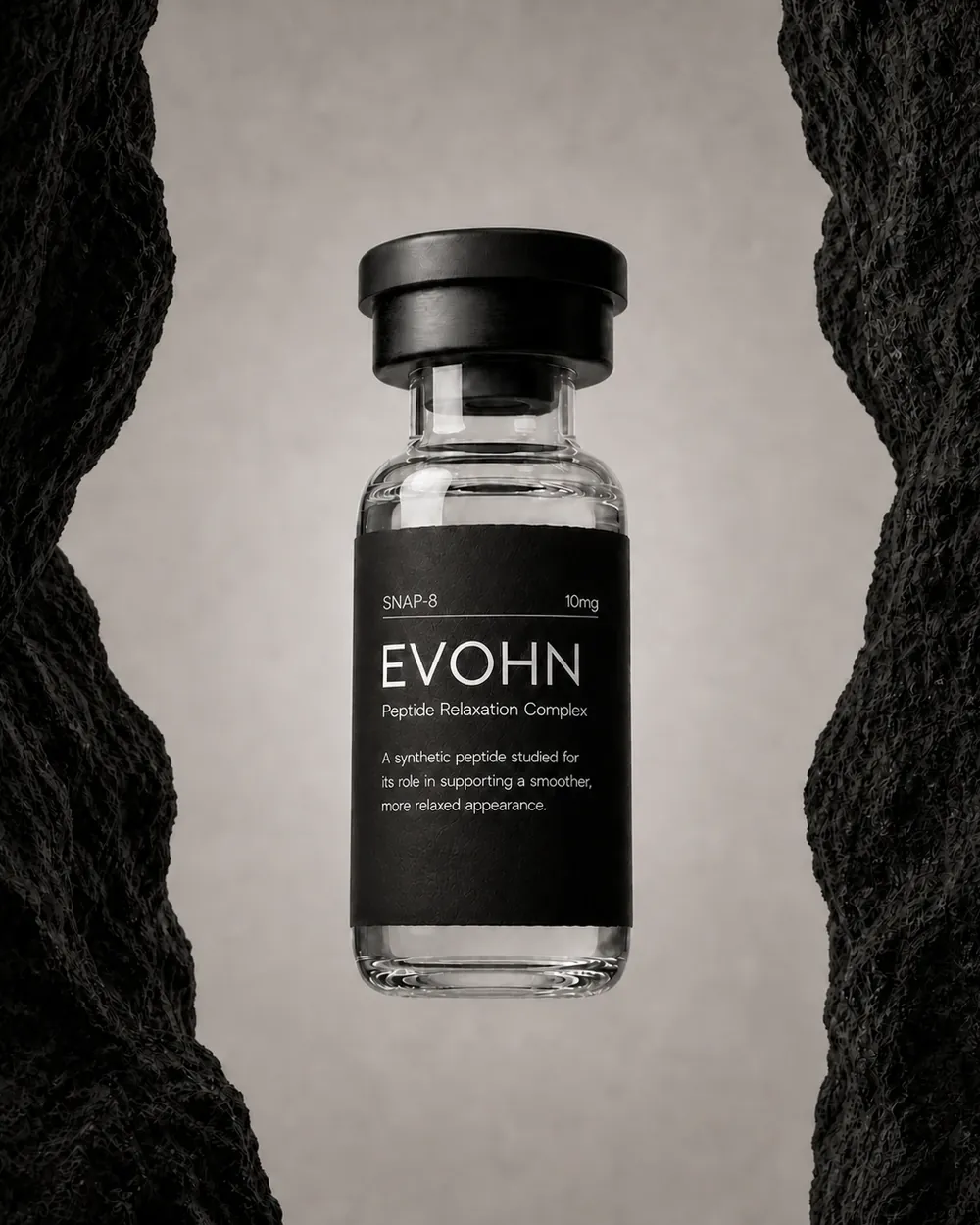
- SNAP-8Paired where dermal repair is measured alongside matrix-active signalling.
Included in research stacks
Molecular & pharmacokinetic data
The physical record
Verify every figure against the certificate of analysis for the batch you hold. Where the label and the assay disagree, the assay is the number to calculate from.
- CAS number
- 137525-51-0 / 77591-33-4
- Molecular formula
- C₆₂H₉₈N₁₆O₂₂ / C₂₁₂H₃₅₀N₅₆O₇₈S
- Molar mass
- ≈ 1419.53 / 4963.44 g/mol
- Sequence
- GEPPPGKPADDAGLV (BPC-157)
- Reported half-life
- Short for BPC-157; extended for TB-500
- Solubility
- Readily soluble in bacteriostatic water
Analytical record
Batch EVN-BPC-2606
Analysed by Meridian Analytical Laboratories, ISO/IEC 17025 accredited, under accession MAL-26-06044. The certificate is retrievable from the issuing laboratory independently of us.
All 3 batches- Purity
- 99.82%RP-HPLC, UV 214 nm · spec ≥ 99.0%
- Identity
- 1419.4 Da (theoretical 1419.5)ESI-MS · spec Conforms to theoretical mass
- Assayed content
- 101.2% of labelRP-HPLC against reference standard · spec 95.0 – 110.0% of label
- Water content
- 2.8%Karl Fischer titration · spec ≤ 8.0%
- Residual solvents
- Acetonitrile 64 ppm; TFA below quantitationHeadspace GC-FID · spec Within USP <467> limits
- Appearance
- White lyophilised cakeVisual inspection · spec Conforms
Storage
Store lyophilised at −20 °C, protected from light and moisture. Following reconstitution, hold at 2–8 °C and use within the interval stated on the batch certificate of analysis.
Handling
Allow the vial to reach ambient temperature before breaking the seal so atmospheric moisture does not condense onto the cake. Introduce diluent slowly against the vial wall rather than directly onto the powder, and swirl rather than shake. Avoid repeated freeze-thaw cycles; aliquot where a preparation will be drawn on more than once.
Packaging
Amber borosilicate vial with butyl stopper and aluminium crimp seal, presented in a matte debossed box with die-cut foam insert and magnetic closure.
Selected references
The published record
A starting point rather than a survey. Entries are listed for orientation and do not constitute endorsement of any interpretation drawn from them.
- 01BPC 157 and the VEGFR2-Akt-eNOS signalling pathwayJournal of Applied Physiology, 2016
- 02Thymosin β4 and actin sequestrationAnnals of the New York Academy of Sciences, 2012
- 03Actin-binding peptides in tissue remodellingExpert Opinion on Biological Therapy, 2019
This catalogue is presented for informational purposes only. It is not an offer of sale, and it makes no medical or therapeutic claim.
You may also be studying
Enquiries
Request the batch documentation.
Ask a specialist about BPC-157 + TB-500 — its current batch, analytical documentation, and what can be supplied to your territory.