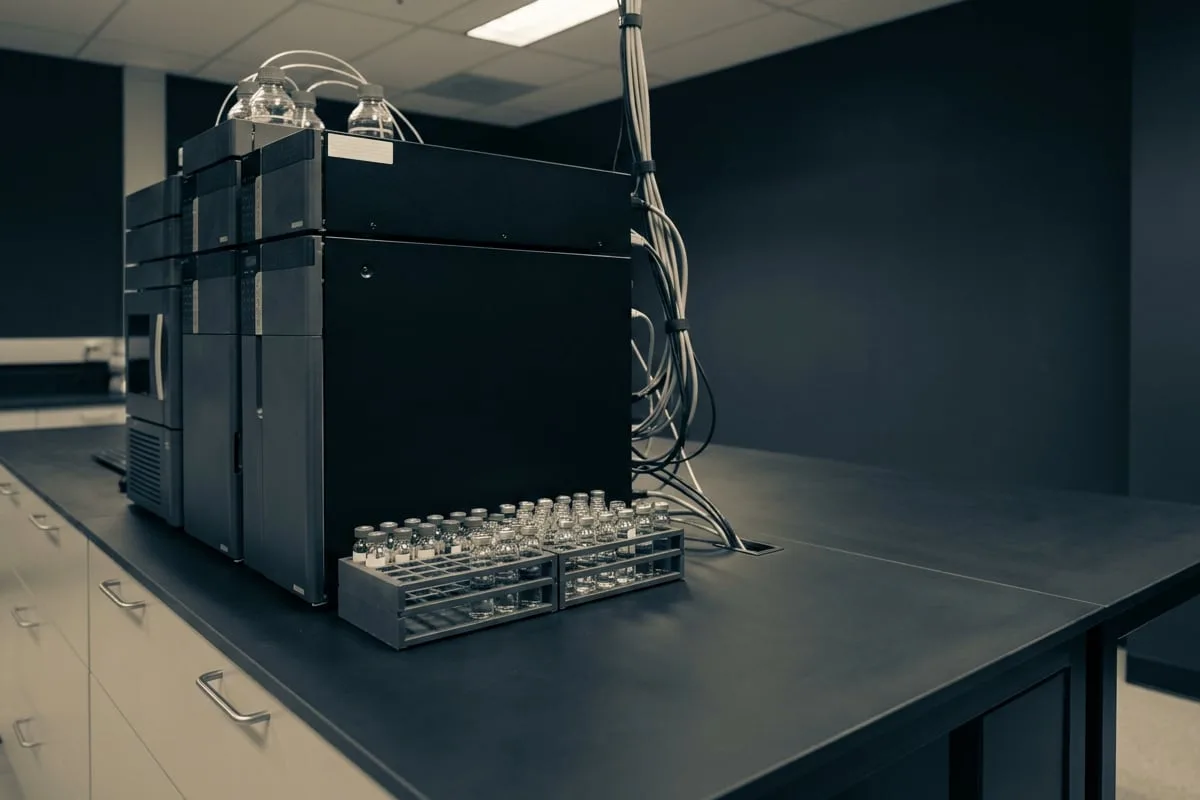
Every manufacturer tests. In-process testing is how a synthesis is controlled at all — you cannot purify what you have not measured. But in-process testing exists to inform a decision the manufacturer is making, and that is a fundamentally different activity from producing an independent record of what a batch contains.
What 'third party' has to mean
- No ownership relationship between the testing laboratory and the manufacturer.
- No commercial dependence that would make an unfavourable result costly to report.
- An accreditation — ISO/IEC 17025 is the relevant standard — that subjects the laboratory's own methods to periodic external audit.
- A retrievable record: the laboratory can confirm the report independently when asked.
Accreditation is not a logo
ISO/IEC 17025 is a competence standard for testing laboratories. It covers method validation, equipment calibration, personnel qualification, and — the part that matters most here — impartiality. An accredited laboratory has to demonstrate that its results are not shaped by who is paying for them. That is the specific assurance the accreditation exists to provide.
Why publication changes the incentive
A certificate available on request is disclosed to the people who ask. A certificate published as a matter of course is disclosed to everyone, including anyone inclined to check it against the laboratory's own records. The second arrangement is harder to game, and the difficulty is the point.