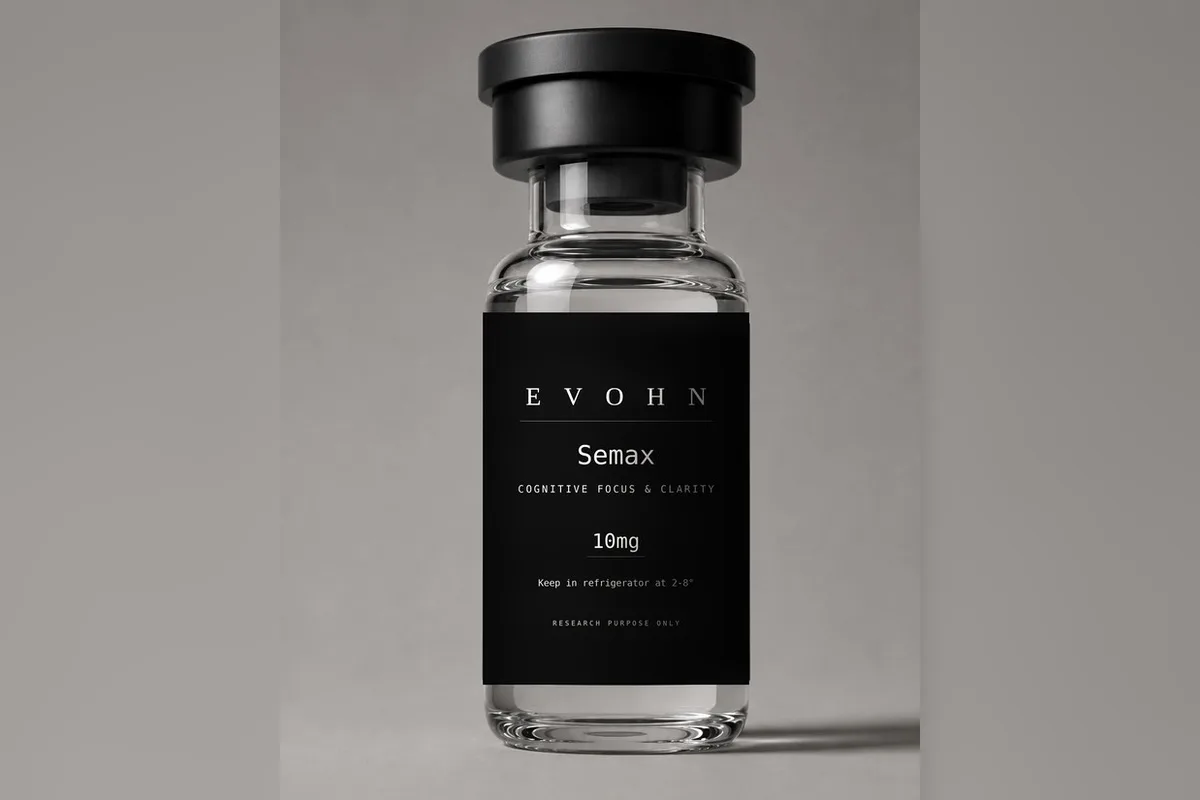
Short peptides have a chronic problem: they are cleared quickly. The Russian regulatory-peptide series addressed it with a specific structural solution — a proline-glycine-proline extension appended to a biologically active core — and two members of that series, Semax and Selank, have become the most documented examples.
What the extension does
The PGP motif confers resistance to peptidase cleavage, extending the window over which the active core remains available. It is a pharmacokinetic modification rather than a pharmacodynamic one: it does not alter what the core does, only how long it persists to do it.
Two different cores
- Semax derives from ACTH(4-10) and is characterised as raising BDNF and NGF transcript levels in hippocampal and cortical preparations — without the adrenocorticotropic activity of the parent fragment.
- Selank derives from tuftsin, an immunomodulatory tetrapeptide, and is examined for inhibition of enkephalin-degrading enzymes alongside changes in GABAergic and serotonergic gene expression.
Why the pairing is methodologically useful
Two compounds sharing a stability architecture but not a mechanism are close to an ideal control pair. Where a difference appears between them, pharmacokinetics is largely excluded as the explanation, because the property governing clearance is common to both. That is a rare position to be in.
How the literature handles overlap
Both compounds touch serotonergic signalling, and published designs commonly run separate arms before any combined arm so that overlapping effects can be attributed correctly. A combined-only design produces a result that neither compound can claim.